ઐતિહાસિક સ્થળો
Historical Places near Nakhatrana
Kutch was ruled from near Nakhatrana for four centuries, and that history survives in a hill fort, a monastery estate, a hero’s shrine and a battlefield.
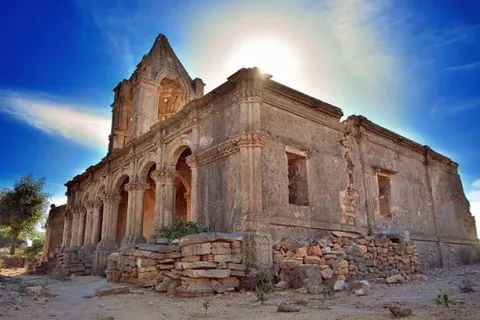
Which historical places are near Nakhatrana?
Four historical places sit around Nakhatrana: Than Jagir, the monastery estate at the foot of Dhinodhar; Roha Fort, a hill fort damaged in the 2001 earthquake; the shrine of Veer Jam Abda Adbhang Dada in Abdasa; and Zara, site of the 1762 battle of Jara. The rulers of Kutch governed from Lakhiarviro, near present-day Nakhatrana, from 1147 to 1548.
| Place | From Nakhatrana | Area |
|---|---|---|
| Than Jagir | see map | Than, at the foot of Dhinodhar |
| Roha Fort | see map | Roha |
| Veer Jam Abda Adbhang Dada | see map | Abdasa taluka |
| Zara (Jara) | see map | Kutch |
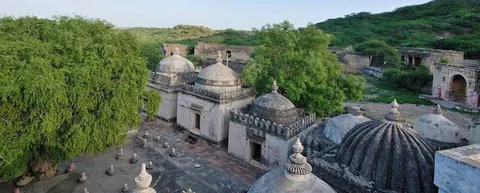
Than Jagir
Than Jagir is the monastery estate at Than, at the foot of Dhinodhar Hill, associated with Guru Dharamnath and the Kanphata Nath yogis. It is usually visited together with the climb up Dhinodhar, north of Nakhatrana. It is a living religious centre, so dress modestly and follow local customs.
- What it is
- Historical place
- Where
- Than, at the foot of Dhinodhar, Kutch district, Gujarat
- Distance from Nakhatrana
- Open the directions link for the route.
- By road
- By car or taxi from Nakhatrana. Open the directions link for the current route and road distance.
- Best season
- October to March; avoid midday in summer.
- Timings and entry
- A living monastery; visit in daylight and respect prayer times.
- Nearby
- Dhinodhar Hill
- Directions
- Google Maps directions from Nakhatrana
Roha Fort
Roha Fort, also called Roha Sumari, stands on a hill about 800 feet high near Roha village. Local histories say Rao Khengarji I granted Roha to his brother Sahebji and that the estate once covered 52 villages; much of the fort was damaged in the 2001 earthquake (nakhatrana.wordpress.com).
- What it is
- Historical place
- Where
- Roha, Kutch district, Gujarat
- Distance from Nakhatrana
- Open the directions link for the route.
- By road
- By car or taxi from Nakhatrana. Open the directions link for the current route and road distance.
- Best season
- October to March; avoid midday in summer.
- Timings and entry
- Ruined hill fort; visit in daylight and take care on broken ground.
- Directions
- Google Maps directions from Nakhatrana
Roha and the poet Kalapi
Roha is tied to Kalapi (Sursinhji Takhtasinhji Gohil), one of the best-loved poets of Gujarati literature, who was also the ruler of Lathi state in Saurashtra (Wikipedia). At 15 he married Rajba, also called Ramaba, a princess of the Roha Jagir. The marriage made him son-in-law to Roha’s Jadeja rulers, and he visited the estate often, so the hill fort holds a place in the life of Gujarat’s great romantic poet.
Veer Jam Abda Adbhang Dada
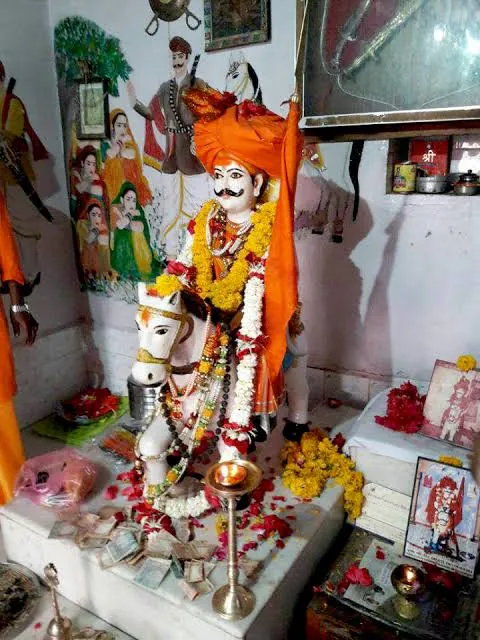
Veer Jam Abda Adbhang Dada is a shrine to Jam Abda, also known as Jam Abada Jadeja or Jakhraji Jam, a 14th-century Sama Rajput ruler of western Kutch remembered for defending refugees at the cost of his life. Abdasa taluka, west of Nakhatrana, is named after him (nakhatrana.wordpress.com). Families from across western Kutch visit to honour him.
- What it is
- Historical place
- Where
- Abdasa taluka, Kutch district, Gujarat
- Distance from Nakhatrana
- Open the directions link for the route.
- By road
- By car or taxi from Nakhatrana. Open the directions link for the current route and road distance.
- Best season
- October to March; avoid midday in summer.
- Timings and entry
- Shrine; visit respectfully during daylight hours.
- Directions
- Google Maps directions from Nakhatrana
The legend of Jam Abda
Jam Abda ruled western Kutch from his capital at Vadsar in the early 14th century, the time of the Delhi Sultan Alauddin Khilji. When Khilji’s army invaded Sindh, 140 Sumra (Sumari) queens and princesses fled into Kutch looking for shelter. Other rulers, wary of the Sultan’s power, held back. Jam Abda, then only about 25, gave them his full protection.
When the Sultan’s commander tracked the women to Vadsar and demanded their surrender, Jam Abda refused. With a small but fiercely loyal force he held off a far larger army for several weeks, until he was killed in battle. Tradition holds that after his death the Sumra women, together with the women of his own family, chose to die by sati rather than be taken.
His title, Adbhang, means unbreakable. Across Kutch he is remembered as a symbol of courage and of the Kshatriya duty to protect those who ask for refuge, and Abdasa taluka, with its headquarters at Naliya, is named after him.
Regional accounts and lineage records add a link to Karnataka: they hold that his grandson Krishnaraj moved south to the Deccan in 1336, and that his descendants went on to found the Wadiyar dynasty, the rulers of Mysore.
Zara (Jara)
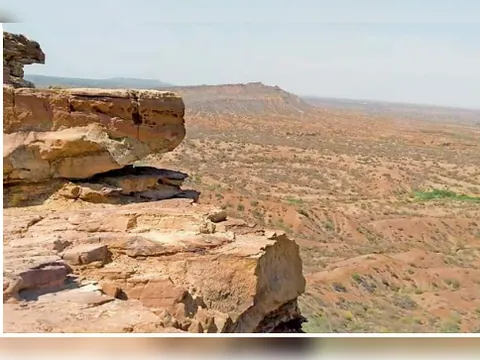
Zara, also spelt Jara, is the site of the 1762 battle of Jara, where an invading army from Sindh defeated the forces of Kutch (nakhatrana.wordpress.com). It is one of the turning points in the history of the old Cutch State.
- What it is
- Historical place
- Where
- Kutch district, Gujarat
- Distance from Nakhatrana
- Open the directions link for the route.
- By road
- By car or taxi from Nakhatrana. Open the directions link for the current route and road distance.
- Best season
- October to March; avoid midday in summer.
- Timings and entry
- Open site; visit in daylight.
- Directions
- Google Maps directions from Nakhatrana
Frequently asked questions
Was Nakhatrana ever the capital of Kutch?
Not the town itself, but the land around it. According to Wikipedia’s Cutch State article, the rulers of Kutch governed from Lakhiarviro, near present-day Nakhatrana, from 1147 to 1548, and moved the capital to Bhuj in 1549. That is why this guide says Kutch was first ruled from here, while Bhuj has been the capital for nearly five centuries since.
What happened at the battle of Jara?
In 1762 an invading army from Sindh defeated the forces of Kutch at Jara, also spelt Zara, according to local histories (nakhatrana.wordpress.com). It is remembered as one of the turning points in the history of the old Cutch State. What remains to see at the site today still needs confirming before you plan a long detour.
Can you visit Roha Fort?
Roha Fort stands on a hill about 800 feet high near Roha village, and much of it was damaged in the 2001 earthquake, according to local histories. Ruins on hilltops can be unstable, so stay on clear paths and away from damaged walls. The fort is also remembered for the poet Kalapi, who married a princess of the Roha estate. Use the directions link for the route from Nakhatrana.
Why is Abdasa taluka named after Jam Abda?
Abdasa takes its name from Jam Abda, also called Jam Abada Jadeja or Jakhraji Jam, a 14th-century Sama Rajput ruler of western Kutch. He is remembered for sheltering 140 Sumra queens and princesses who fled Sindh, and for dying in battle rather than hand them over to the Delhi Sultan’s army. His shrine, Veer Jam Abda Adbhang Dada, honours him; adbhang means unbreakable.
When is the best time to visit historical places near Nakhatrana?
October to March is the best time to visit the forts, shrines and battlefields around Nakhatrana. Most are outdoors with little shade, so start early and avoid midday, especially between March and June when temperatures can pass 40°C. After heavy monsoon rain, rough tracks to hilltop ruins such as Roha can be slippery.